




MBBS (Singapore), MRCS (Edinburgh)
MMed (Orth), FRCS Orth & Tr (Edinburgh)
Dismiss the rest-and-wait fallacy. Recovery isn’t a passive period of inactivity; it’s an active clinical phase of rebuilding tissue tolerance and mechanical stability. When an athlete stops training due to a sports injury, the primary goal is often misplaced on simple symptom management—reducing swelling or dulling pain. However, returning to the field based solely on the absence of pain is the leading cause of chronic re-injury.
Instead, true recovery requires closing the functional gap between basic daily movement and high-impact performance. This involves a structured, evidence-based progression that ensures ligaments, tendons, and muscles are biologically prepared for the specific mechanical stresses of your sport. By following a clinical roadmap rather than a calendar, you move beyond temporary relief and toward long-term joint preservation.
The Biological Clock: Why Healing Cannot Be Rushed
Healing does not happen overnight. Your body needs time to repair properly, and rushing back too soon can make things worse.
Understanding these three phases helps guide safe recovery:
-
Phase 1: The Inflammatory Response (0–72 Hours)
This is the body’s immediate survival mechanism. While swelling and pain are uncomfortable, they’re necessary signals that trigger the removal of damaged cells and the delivery of repair proteins to the injury site. Phase 2: The Proliferative Stage (Days to Weeks)
During this phase, the body begins laying down new collagen fibres. However, this new tissue is disorganised and lacks the tensile strength of the original ligament or tendon. It is an early repair that is still weaker and less organised than normal tissue.Phase 3: The Remodelling Phase (Months)
This is the final and longest stage. Through controlled mechanical stress, the body realigns the collagen fibres to handle the specific loads of your sport. Skipping this phase means the tissue remains weak and prone to failure under pressure.
The most precarious moment in an athlete’s recovery occurs during the transition from the proliferative stage to the remodelling phase. This period can be risky because the absence of pain may mask underlying weakness. Once the initial inflammation subsides and the sharp discomfort disappears, it’s easy to assume the joint is fully healed and ready for competition.
In reality, the newly formed tissue remains immature and lacks the tensile strength required for high-intensity activity. Returning to high-impact loading or explosive movements during this window places maximum stress on a structure that is still significantly weaker than normal. It’s for this reason that this increases the risk of re-injury, sometimes occurring soon after returning to activity.
Common Sports Injuries: Identifying Structural vs. Functional Damage
Sports injuries are generally classified by their mechanism of onset, whether it’s a sudden traumatic failure or the result of progressive mechanical wear. Identifying which category an injury falls into is essential for establishing an accurate recovery timeline:
Acute Ligamentous Tears:
These injuries occur during a sudden trauma, such as a pivot or collision, often resulting in an audible snap. Because ligaments provide joint stability, a tear like an ACL rupture leads to a feeling of the joint giving way during movement.Chronic Tendon Pathologies:
Tendonitis develops as a persistent burn caused by the gradual degradation of collagen fibres through repetitive overloading. Over time, the tendon loses its elasticity and its ability to store energy, which significantly reduces explosive power and performance.Mechanical Stress Fractures:
A stress fracture is a structural failure that occurs when repetitive micro-trauma overwhelms the bone’s natural ability to repair itself. If an athlete continues to load the bone despite a localised ache, these microscopic cracks can eventually progress into a complete break.
The Kinetic Chain: How an Injury Travels
Because the body operates as a linked kinetic chain, a structural failure in one joint fundamentally alters how the rest of the limbs absorb force and coordinate movement. This disruption manifests in two distinct ways that can jeopardise your long-term recovery:
Compensatory Mechanics:
When an injury like a sprained ankle limits your stability, the knee and hip are forced to absorb the impact that the ankle can no longer manage. This shift often causes secondary issues, such as hip bursitis or meniscus strain, because these joints are being loaded at angles they aren’t designed to support.Neuromuscular Inhibition:
It’s common for the brain to switch off the muscles surrounding an injured joint as a protective reflex to prevent further pain. If these neural pathways aren’t actively retrained, the muscles stay inhibited even after the tissue has healed, leaving the joint functionally weak and vulnerable to giving way.
Clinical Diagnostics: Mapping the Damage
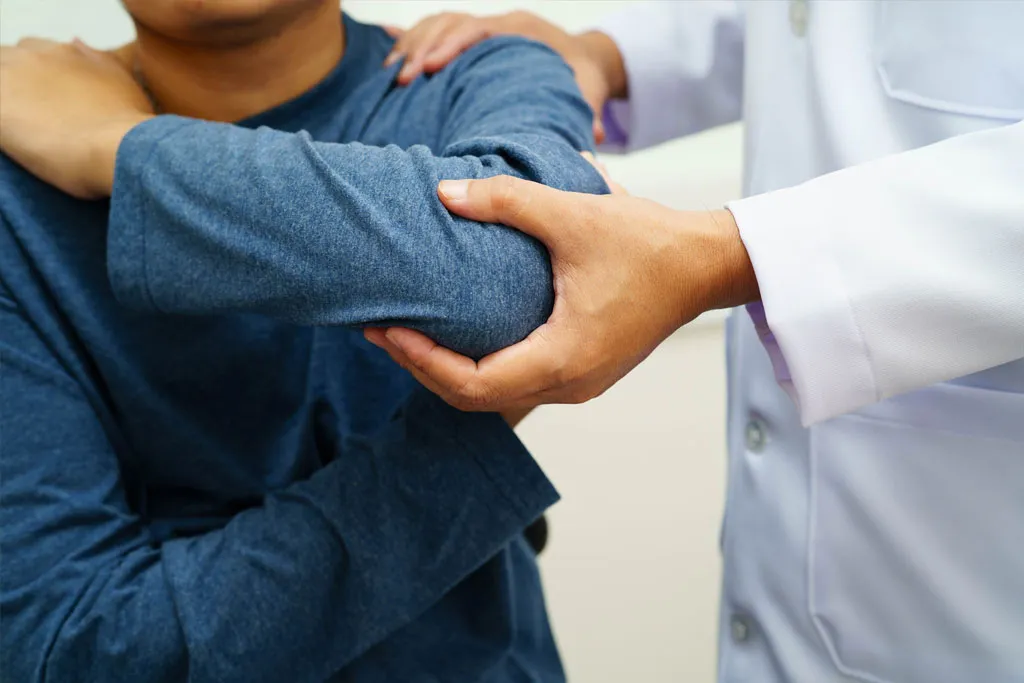
A standard physical examination can only reveal so much; it’s essential to use advanced diagnostics to see how the injury behaves under stress. These tools provide the objective data needed to bridge the gap between how a joint looks and how it actually functions:
Dynamic Ultrasound:
This allows for a real-time assessment of tendon and ligament function as you move the joint. Unlike static scans, it’s effective for catching impingements or structural instability that only appear when the tissue is in motion.Weight-Bearing Assessment:
Evaluating the joint’s structural integrity while it’s under actual load is the only way to measure its true capacity. It’s a vital step in determining if the limb can safely handle the gravitational forces required for running or jumping.MRI Analysis:
An MRI is the gold standard for identifying bone marrow oedema or internal cartilage fraying that standard exams often miss. It provides a high-resolution view of deep tissue health, ensuring that no underlying structural pathologies are overlooked before you return to play.
Targeted Recovery: Evidence-Based Interventions
Modern sports surgery and medicine have moved beyond the basic rest and ice protocol, utilising advanced technologies to directly accelerate the repair of damaged tissue. These interventions are designed to address specific biological roadblocks that often prevent a sports injury from healing naturally:
Shockwave Therapy (ESWT):
This treatment uses high-energy acoustic pulses to create micro-trauma in chronic, non-healing sports injuries like Achilles tendonitis. It’s an effective way to restart the healing process by stimulating blood flow and collagen production in areas where the body’s repair response has stalled.Viscosupplementation:
For athletes dealing with post-traumatic joint friction, these injections provide essential lubrication to the joint space. It’s a clinical method of mimicking natural synovial fluid, which helps to reduce pain and prevent further cartilage wear as you return to high-impact training.Custom Orthotic Support:
Orthotics are used to correct the underlying biomechanical flaws, such as overpronation or fallen arches, that likely contributed to the injury. By realigning the foot and ankle, it’s possible to ensure that every step you take distributes force evenly across the kinetic chain rather than overloading a single joint.
The Return-to-Sport Protocol: A Criteria-Based Approach
Safe clearance for competition is determined by meeting specific functional benchmarks rather than simply waiting for a date on the calendar. This criteria-based progression ensures the joint can withstand the escalating mechanical demands of each recovery phase:
Phase 1: Pain-Free ADLs
Before any athletic training begins, the joint must handle the basic loads of activities of daily living (ADLs) without swelling or discomfort. If you can’t walk or climb stairs pain-free, it’s a clear indicator that the tissue isn’t yet ready for linear impact.Phase 2: Linear Loading
Once basic mobility is restored, the focus shifts to linear loading, such as progressive walking and eventually straight-line running. This phase is designed to rebuild the capacity of tendons and muscles to manage vertical ground reaction forces before adding the complexity of rotation.Phase 3: Multi-Directional Stress
This stage introduces controlled pivoting, cutting, and jumping to test the joint’s lateral stability. It’s a critical bridge in the recovery process, as it forces the neuromuscular system to coordinate complex movements that mimic the chaotic nature of sport.Phase 4: Sport-Specific Drills
The final phase involves testing the limb under conditions that replicate actual play, including reactive drills and high-intensity contact. Passing this stage confirms that you’ve closed the functional gap and are mechanically prepared to return to full competition.
Expert Sports Injury Management at Quantum Orthopaedics
Effective recovery from a sports injury is a clinical process that requires more than just patience; it’s about following a structured, criteria-based roadmap to restore your mechanical integrity. By respecting the biological timeline of healing and addressing the kinetic chain as a whole, you can bridge the functional gap between basic movement and elite performance.
At Quantum Orthopaedics, we specialise in identifying the root cause of your pain and implementing evidence-based interventions to get you back on the field safely. Whether you’re dealing with an acute tear or a chronic pathology, our team, led by Dr James Tan Chung Hui, provides the diagnostic precision and targeted treatments necessary for long-term joint preservation.
Don’t leave your recovery to chance or rely on the absence of pain as your only guide. Book an appointment with us today to receive a comprehensive clinical assessment and a tailored return-to-sport protocol.
Frequently Asked Questions (FAQs) About Sports Injuries
Should I use ice or heat for a new sports injury?
For acute injuries, ice is preferred within the first 48 to 72 hours to constrict blood vessels and limit excessive swelling. Heat should only be applied later in the recovery phase to increase blood flow and relax stiff muscles once the initial inflammation has subsided.
How do I know if my injury requires surgery or just physiotherapy?
A clinical assessment using dynamic imaging is essential to determine if the damage necessitates surgical realignment or if the tissue can repair itself through rehabilitation. Generally, if you experience joint locking, giving way, or persistent pain that does not resolve with rest, you likely have a structural tear that requires surgical intervention rather than physiotherapy alone.
What is the most common cause of re-injury in athletes?
The most frequent cause of re-injury is returning to sport based on the absence of pain rather than the restoration of functional strength. Without addressing the underlying mechanical deficits or kinetic chain imbalances, the weakened tissue remains highly vulnerable to failure under high-impact loads.
Meet Our Sports Injury Specialist in Singapore
Dr James Tan Chung HuiMBBS (Singapore), MRCS (Edinburgh)MMed (Orth), FRCS Orth & Tr (Edinburgh)
Dr James Tan Chung Hui is a Senior Consultant Orthopaedic Surgeon with over 15 years of experience in sports surgery and exercise medicine. He specialises in knee, shoulder and elbow injuries, including minimally invasive ligament and tendon repair, cartilage procedures and joint reconstruction. Dr Tan has treated national athletes and professional footballers and is actively involved in research and tissue engineering collaborations. He is an Adjunct Assistant Professor at NUS and a Fellow of the Royal College of Surgeons (Edinburgh).