



MBBS (Singapore), MRCS (Edinburgh)
MMed (Orth), FRCS Orth & Tr (Edinburgh)
Knee and shoulder injuries are among the most common issues faced by active individuals and athletes, often occurring during sports that involve sudden movements, repetitive strain or impact. These injuries can affect performance and if left untreated, may lead to ongoing pain or long-term joint problems.
Understanding how these injuries are diagnosed and treated is key to a safe and effective recovery. From non-surgical care to surgical intervention when needed, the right approach can help restore strength, improve mobility and support a gradual return to sports.
Common Knee Sports Injuries and How They Happen
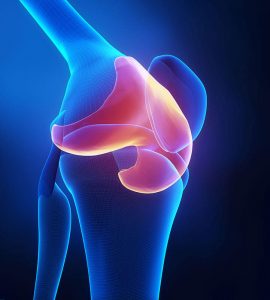
Knee injuries are common in sports that involve running, jumping, pivoting or sudden changes in direction. These movements place significant stress on the knee, increasing the risk of both acute injuries and overuse conditions.
Anterior cruciate ligament (ACL) injuries
Often occur during sudden stops, pivots or awkward landings. They can cause knee instability, swelling and difficulty continuing activity.
Meniscus tears
Involves damage to the cartilage that cushions the knee. Typically caused by forceful twisting while bearing weight, common in sports like football, basketball and tennis.
Patellar tendinitis (jumper’s knee)
An overuse injury affecting the tendon below the kneecap. Frequently seen in sports involving repeated jumping, leading to pain at the front of the knee.
Patellofemoral pain syndrome (runner’s knee)
Characterised by pain around the front of the knee, often triggered by repetitive activities such as running or cycling. Usually linked to overuse or muscle imbalance.
Common Shoulder Sports Injuries and How They Happen
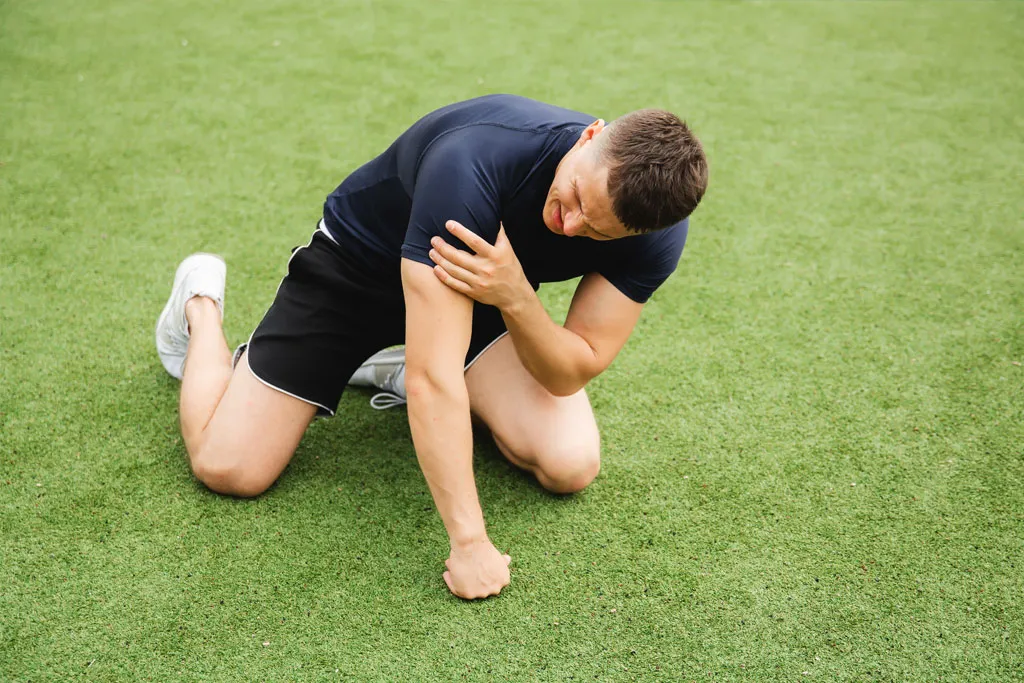
Shoulder injuries are common in sports that involve repetitive overhead movements, heavy lifting or contact. The shoulder joint’s wide range of motion makes it more prone to instability and strain, especially with repeated use or sudden impact.
Rotator cuff tears or strains
Occurs when the tendons stabilising the shoulder are overstretched or torn. Common in overhead sports such as swimming, tennis and weightlifting, leading to pain and weakness.
Shoulder impingement syndrome
Happens when the tendons of the rotator cuff are compressed during arm movements. Often caused by repetitive overhead activity, resulting in pain when lifting the arm.
Shoulder instability or dislocations
Occurs when the shoulder joint is forced out of position, often due to falls or contact sports. This can lead to repeated dislocations and a feeling of the shoulder “giving way.”
Labral tears
Involves damage to the cartilage rim that helps stabilise the shoulder joint. These injuries may result from repetitive overhead motions or sudden trauma, causing pain, clicking or reduced strength.
How Are Knee and Shoulder Sports Injuries Diagnosed?
Accurate diagnosis is an important first step in treating knee and shoulder sports injuries, as it helps determine the severity of the condition and guides the most appropriate treatment plan. Doctors typically begin with a detailed assessment of how the injury occurred, including the type of sport, the movements involved and the onset of symptoms.
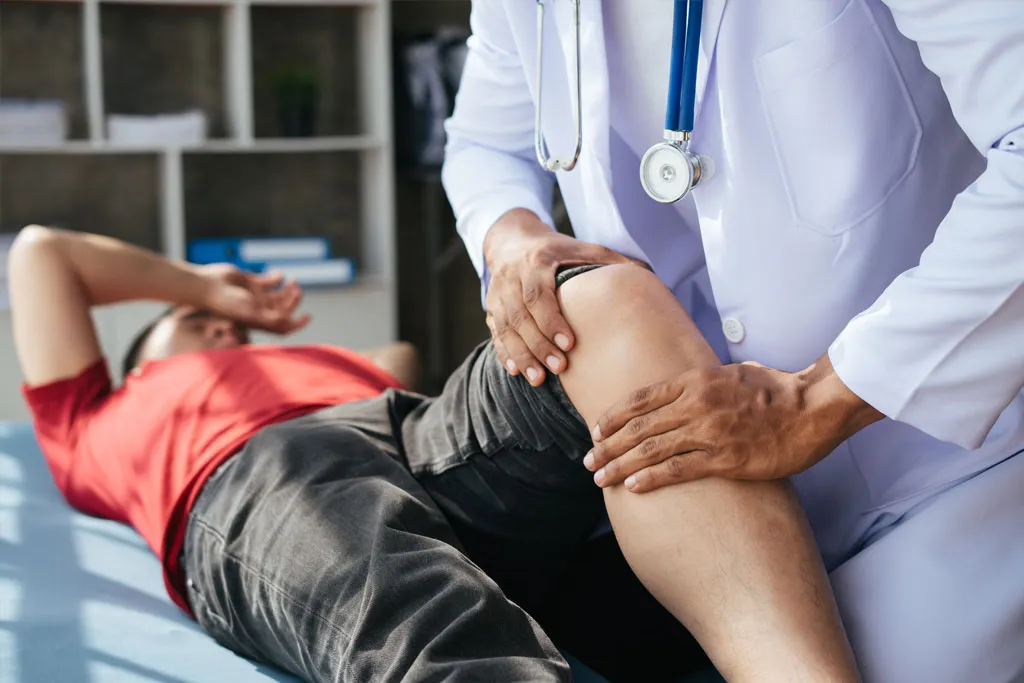
A physical examination is then performed to evaluate joint stability, range of motion, strength and areas of tenderness. Specific tests may be used to identify ligament injuries, tendon damage or joint instability in the knee or shoulder.
Imaging tests may be recommended to confirm the diagnosis or assess the extent of the injury. X-rays are often used to rule out fractures or bone-related issues, while MRI or ultrasound scans provide detailed images of soft tissues such as ligaments, tendons and cartilage.
Treatment Options for Knee and Shoulder Sports Injuries
Treatment for knee and shoulder sports injuries depends on the severity of the condition, the structures involved and the individual’s activity goals. In many cases, non-surgical approaches are effective in relieving pain and restoring function, particularly for mild to moderate injuries.
Non-Surgical Treatment
Non-surgical treatment is often the first line of care and focuses on reducing symptoms while supporting natural healing.
- Rest and activity modificationAvoiding or adjusting activities that aggravate the injury helps prevent further strain and allows the affected tissues to recover.
- Physiotherapy and rehabilitationA structured rehabilitation programme improves strength, flexibility and joint stability, which is essential for recovery and preventing recurrence.
- Medications or injectionsPain relief medications or targeted injections may be used to reduce inflammation and support the rehabilitation process.
Surgical Treatment
Surgery may be recommended for more severe injuries or when conservative treatment does not provide sufficient improvement.
- ArthroscopyA minimally invasive procedure using small instruments and a camera to diagnose and treat joint problems such as a frozen shoulder.
- Ligament reconstructionLigament procedures, such as ACL surgery, are commonly performed for injuries such as ACL tears to restore knee stability.
- Tendon repairUsed to repair torn tendons, such as in rotator cuff injuries, to improve strength and function.
Specialist-Led Sports Injuries Management for Joint Health
Knee and shoulder sports injuries can vary in severity, but with the right diagnosis and treatment, most individuals can achieve a full and safe recovery. Early management and a structured rehabilitation plan play a key role in restoring strength, mobility and function.
Here at Quantum Orthopaedics, we provide specialist care for knee and shoulder sports injuries, offering treatments ranging from conservative management to advanced surgical procedures when needed. Patients are assessed by Dr James Tan Chung Hui, with over 15 years of experience in sports surgery and exercise medicine, whose clientele includes athletes from Singapore’s national teams and professional leagues. If you are experiencing persistent pain, instability or difficulty returning to sports, schedule a consultation for an accurate diagnosis and a personalised treatment plan to support your recovery and return to activity.
FAQs About Knee and Shoulder Sports Injuries
Are sports injuries more likely to recur once they happen?
Yes, there is a higher risk of re-injury if the joint has not fully healed or if rehabilitation is incomplete. Proper physiotherapy and gradual return to activity are important in reducing this risk.
Do I need to stop all physical activity during recovery?
Not always. Modified or low-impact activities may still be recommended to maintain fitness, depending on your condition and stage of recovery.
When is it safe to return to sports after an injury?
Returning to sports should be based on functional recovery rather than time alone. You should regain adequate strength, mobility and confidence in the joint, often guided by your doctor or physiotherapist.
Can previous injuries affect long-term joint health?
Yes, previous injuries can increase the risk of chronic issues such as joint instability or early wear and tear if not properly managed.
Our Specialist at Your Service
Dr James Tan Chung HuiMBBS (Singapore), MRCS (Edinburgh)MMed (Orth), FRCS Orth & Tr (Edinburgh)
Dr James Tan Chung Hui is a Senior Consultant Orthopaedic Surgeon with over 15 years of experience in sports surgery and exercise medicine. He specialises in knee, shoulder and elbow injuries, including minimally invasive ligament and tendon repair, cartilage procedures and joint reconstruction. Dr Tan has treated national athletes and professional footballers and is actively involved in research and tissue engineering collaborations. He is an Adjunct Assistant Professor at NUS and a Fellow of the Royal College of Surgeons (Edinburgh).